This post talks about why professional bindery services are critical for maintaining your corporate credibility and positively influencing your client’s perceptions. We touch on the following topics:
- Why quality finish dictates company credibility.
- How in-house binding avoids cost and delay.
- Whether bindery is actually worth it and why.
- Which finishes are made for real-life use.
Trying to save money when printing tender documents can be a hit or miss. But, if the spine cracks when the client opens it, did you really save any money? A strong finish is a non-negotiable part of corporate credibility.
In corporate SA, perfect finishes from bindery services make your message hit even harder. A loose staple or peeling spine can ruin even the best content. In executive surveys, 87% of leaders say a physical finish can alter their perception of a business’s quality.
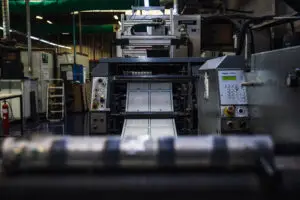
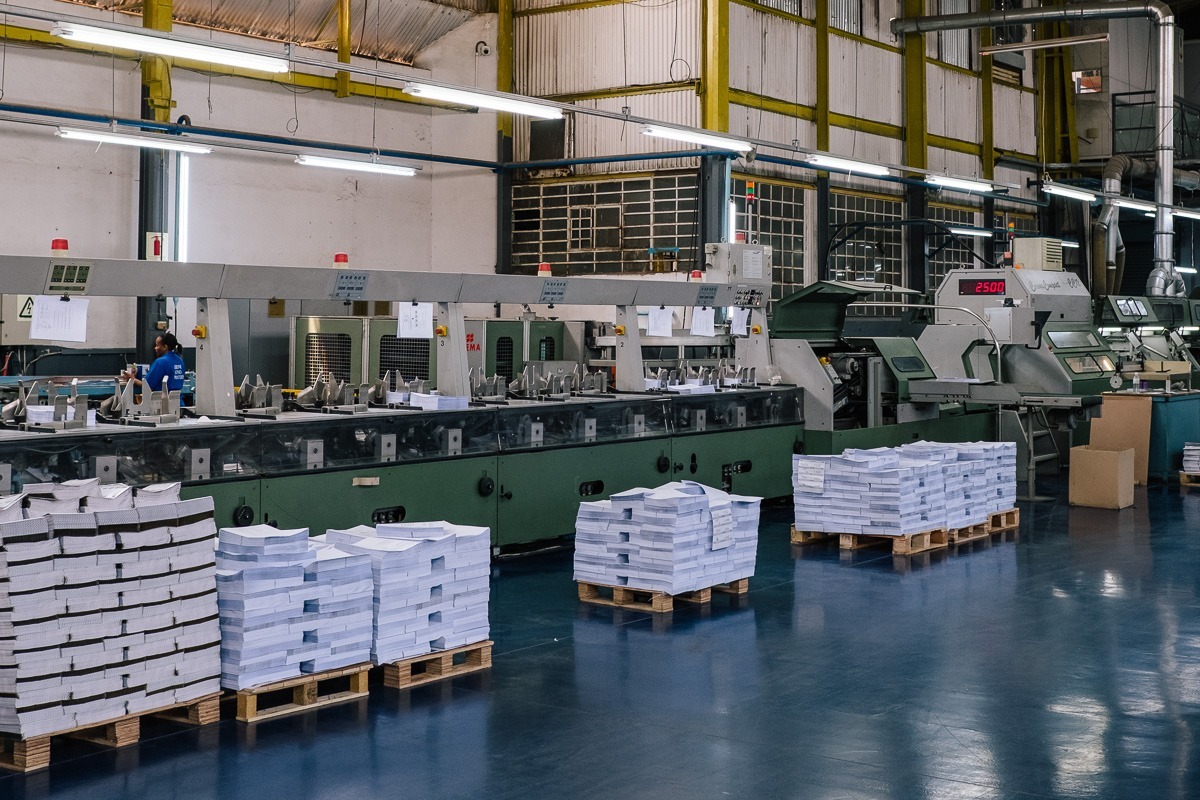
Lebone Litho’s 400 m² bindery hall, filled with nine Muller Martini lines and an Aster book-sewing machine, delivers finishes that match your aims. Make your documents better with our in-house bindery services today.
Where Print Becomes Product
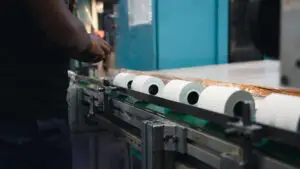
The print press does half the job, and the bindery does the rest. It’s where flat sheets become a finished document. This process includes precise cutting and folding, followed by stitching, glueing, or speciality treatments like die-cutting.
This craftsmanship, done with care and consistency, is what turns an ordinary stack of paper into a durable, professional asset ready for high-stakes presentations or long-term storage.
The Hidden Cost of Outsourced Binding
Sending printed sheets to an outside bindery adds 5–10 days and 15–25% to the cost, plus transport risk. From guillotines to gang stitchers, we keep everything in-house in City Deep, Johannesburg, so your annual reports, training books, or tender documents never leave our secure building.
This central control enables faster processing, eliminating shipping delays and security breaches—critical for confidential annual reports. A top Johannesburg HR Director said, “Our compliance manuals used to be delayed every quarter because of external binding. Now, they are done in one secure place, which is vital for confidentiality.”
This specific feature appeals to executives who want “near me” reliability and truly professional bookbinders.
Finishes That Survive Real Life
Professional bindery services mean a long life. PUR perfect binding (400% stronger than standard glue), lay-flat Otabind, Swiss hardcover with thumb-cut indexing, or strong Wire-O for field guides.
Our lines run 18,000 cycles/hour with no downtime thanks to smart maintenance. We provide tough bookbinding that lasts, using our best-in-class bindery equipment.
2026 Trend: Tactile + Digital Integration
Spot UV, soft-touch coatings and embedded NFC chips turn reports into things you can interact with. Combine this with DTP and litho printing for a single source for corporate documents, faster than working with different suppliers. Only printers with integrated products and finishing can do this easily. Polished outputs build trust – Lebone Litho makes matters easy.
Get a quote from Lebone Litho today and receive a free sample pack to gauge the quality we stand by for yourself.
FAQs
Q: Can a document’s finish really alter a client’s perception of your business?
A: According to executive surveys, 87% of leaders say that the physical finish can alter their overall perception of a business’s quality. This underscores the point that an inferior finish, like a loose staple or a peeling spine, can damage corporate credibility and undermine even the best content.
Q: What are the main drawbacks of outsourcing binding services?
A: Outsourcing can add 5 to 10 days and 15 to 25% to the cost, plus it introduces transport risk and security issues for confidential documents.
Q: Should I be implementing both tactile and digital elements into my materials?
A: Modern trends include Spot UV, soft-touch coatings, and embedded NFC chips, which turn your materials into interactive objects.